Author: Stjepan Kalinic

  • Copper Gets A 2026 Price Bump, As Diverging Market Forces Raise Alarm

    Copper Gets A 2026 Price Bump, As Diverging Market Forces Raise Alarm

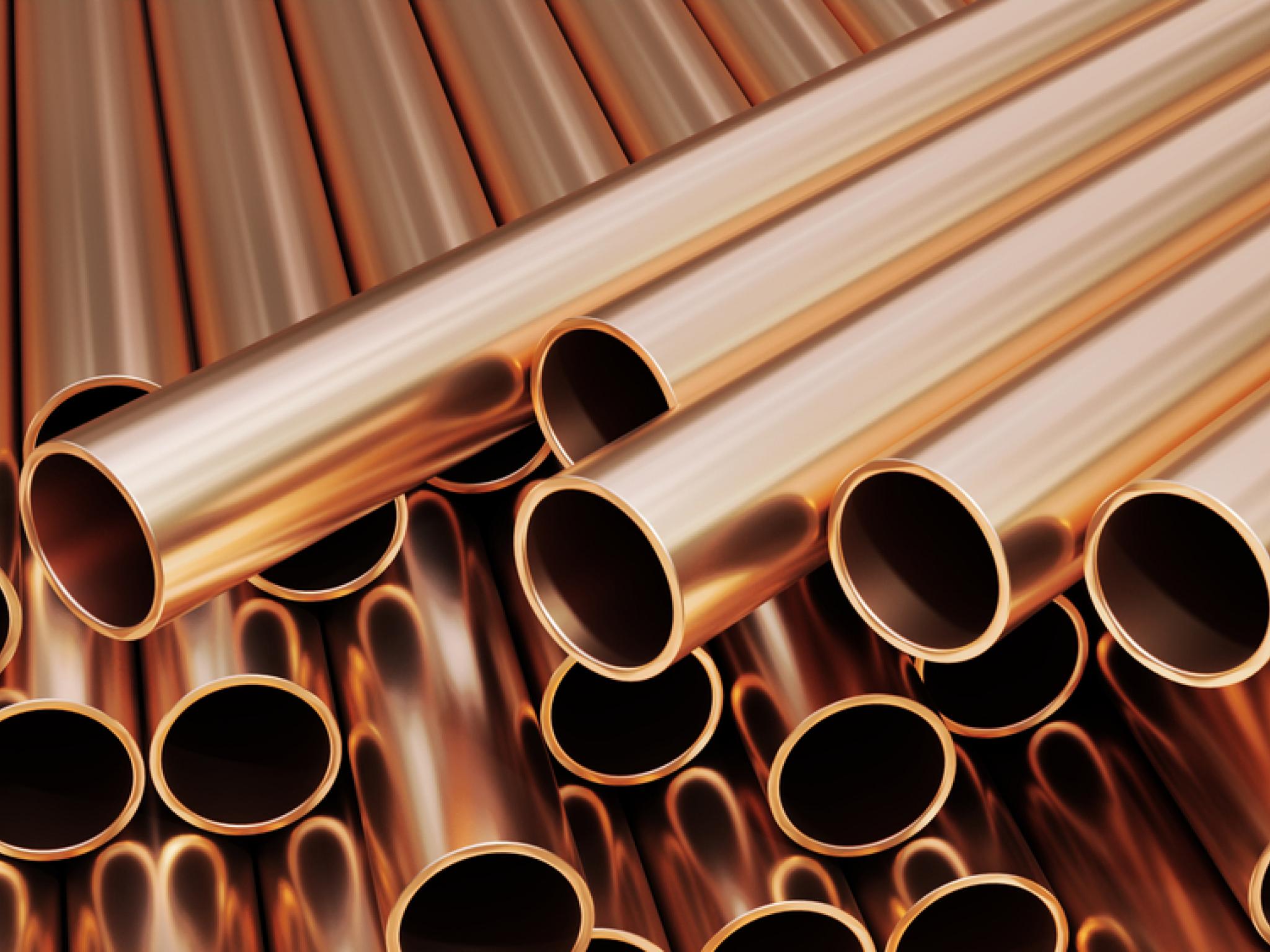
    Copper prices are set for further gains in 2026. Tightening supply, widening market deficits, and mine disruptions all amplify concerns about the metal’s long-term availability. UBS is the latest bank to upgrade the yearly outlook, warning that persistent operational setbacks and falling inventories are now exerting a decisive influence on the market.

    In a note published Friday, UBS raised its March 2026 copper target by $750 per metric ton to $11,500, while lifting its June and September forecasts by $1,000 each to $12,000 and $12,500.

    The bank also introduced a new December 2026 target of $13,000 per ton. The revisions come alongside sharply higher deficit projections: UBS now anticipates a 230,000-ton shortfall in 2025 and a 407,000-ton deficit in 2026—both several times larger than earlier estimates—as refined output growth slows to just 1.2% and 2.2% across the two years.

    Also Read: Copper Is The New Gold–Expert Eyes The Strongest Bull Market In 50 Years

    UBS cited multiple mine disruptions as a clear sign of tightening supply. This year’s setbacks include lower-than-expected recoveries in Chile and recurring unrest in Peru. Furthermore, operational issues at Freeport-McMoRan’s (NYSE:FCX) Grasberg complex in Indonesia weigh on production.

    Freeport’s Delays

    The largest domestic copper miner continues to recover from a September mudflow at the Grasberg Block Cave that killed seven workers and halted operations. The expectations are to restart Block Cave in the first quarter of 2026 and produce 478,000 tons of copper cathode. Meanwhile, the initial goal was 700,000. 

    Yet the demand continues in the opposite direction. UBS expects global copper consumption to grow by 2.8% in both 2025 and 2026, driven by electric vehicles, renewable energy, grid upgrades, and rapidly expanding data center construction.

    The divergence has made copper assets extraordinarily valuable and increasingly difficult to buy. BHP’s (NYSE:BHP) dramatic, last-minute attempt to derail Anglo American’s (OTCQX:AAUKF) planned $53 billion combination with Teck Resources (NYSE:TECK) shows how competitive the race for copper has become.

    $100 Billion Budget

    Copper’s strategic importance is also reshaping government policy. Securing supplies of copper and other critical minerals has become a matter of national security for the United States, which has unveiled billions in support through multiple agencies.

    The largest single source of funding is the U.S. Export-Import Bank (EXIM). The bank plans to invest $100 billion as part of a broader effort to counter Western dependence on China and Russia.

    “We can’t do anything else that we’re trying to do without these underlying critical raw material supply chains being secure, stable and functioning,” newly appointed EXIM chair John Jovanovic told the Financial Times.

    EXIM has already provided a $1.25 billion loan for Barrick’s (NYSE:B) Reko Diq project in Pakistan, and Jovanovic said the bank is now working on several additional critical-minerals transactions “orders of magnitude larger,” though he offered no further details.

    Read Next:

    Image by Siwakorn TH via Shutterstock
  • Trump’s $8.5 Billion Deal With Australia Challenges Chinese Dominance

    Trump’s $8.5 Billion Deal With Australia Challenges Chinese Dominance

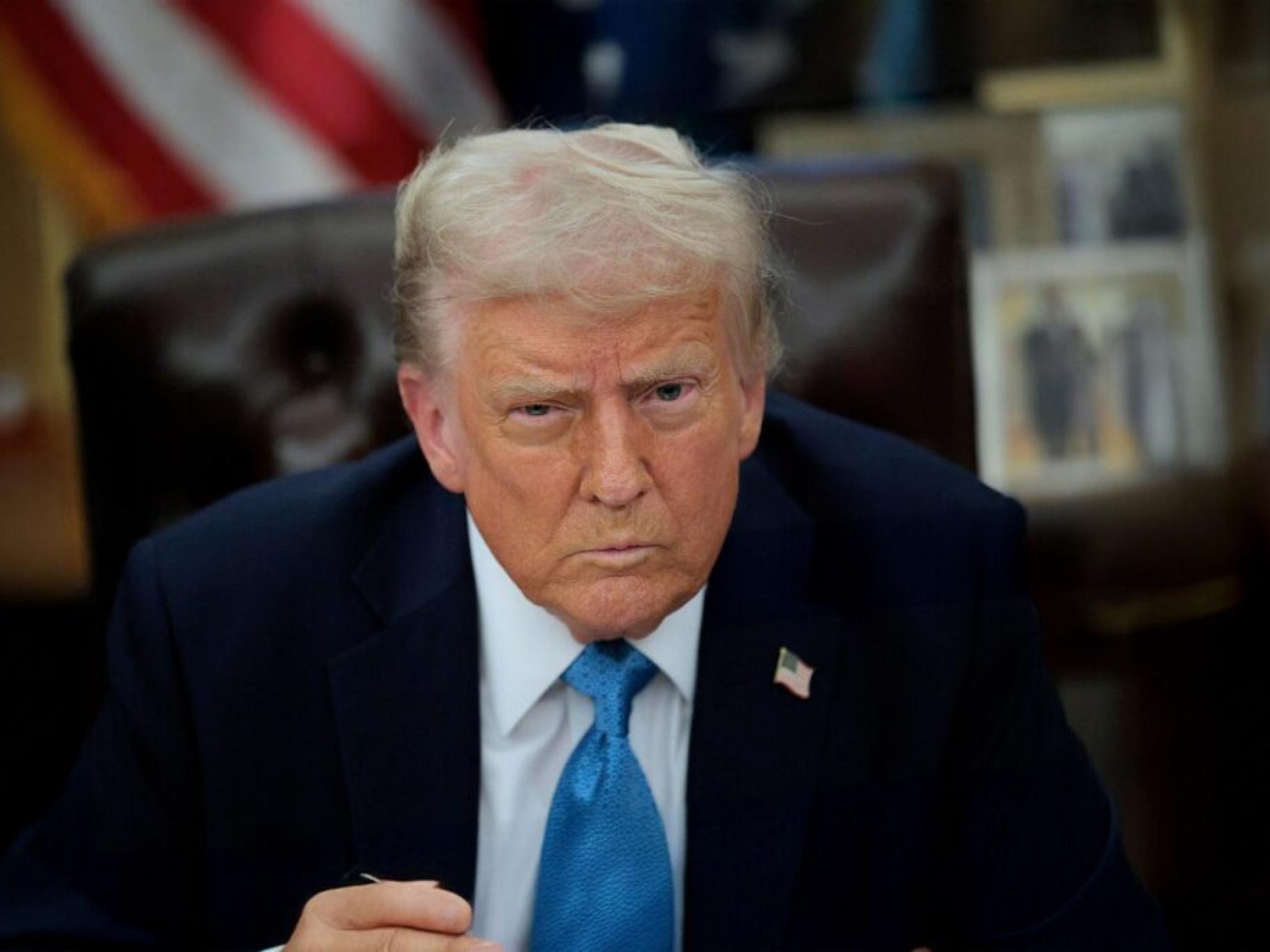
    President Donald Trump and Australian Prime Minister Anthony Albanese on Monday signed a multibillion-dollar partnership at the White House. The goal is to secure the future of global critical mineral supply chains and strengthen defense cooperation.

    New Framework for Supply Chain Security

    The agreement, titled the “U.S.–Australia Framework for Securing of Supply in the Mining and Processing of Critical Minerals and Rare Earths,” establishes a bilateral response group to coordinate policy, investment, and project delivery.

    “President Trump and I agreed today we will work very hard together in both our nations’ interests. We have agreed today Australia and America are going to make more things together with our historic framework on critical minerals,” Albanese said.

    Also Read: Trump Likely To Invest In More Rare Earths, Bessent Says

    Commitment of Billions in Joint Investment

    The framework will channel billions in joint investment into mining, refining, and advanced manufacturing projects vital for defense and technology.

    The Export-Import Bank of the United States has issued seven Letters of Interest worth $2.2 billion, unlocking up to $5 billion in total investment. Furthermore, direct contributions from both governments will be $3 billion over six months, toward an $8.5 billion project pipeline.

    Australia’s superannuation funds are also expanding U.S. exposure, expected to rise to $1.44 trillion by 2035, fueling technology and energy ventures across both economies.

    Strengthening Defense Collaboration

    The deal also strengthens industrial defense collaboration, with additional Australian investment in Anduril underwater vehicles, Apache helicopters, and U.S.-made missile defense systems, reinforcing AUKUS cooperation.

    High-Priority Projects: Rare Earths and Gallium

    Two high-priority mining projects will receive immediate support. The first is Arafura Rare Earths’ (OTC:ARAFF) Nolans venture in the Northern Territory, which secured $100 million in equity. Its fully integrated “ore-to-oxide” model will enable processing onshore, ensuring a secure, transparent supply chain for Western defense industries.

    When complete, Nolans will supply roughly 5% of global rare earth demand, focusing on neodymium and praseodymium. These are key metals for missiles, electric vehicles, and fighter jet systems.

    The second project is Alcoa’s (NYSE:AA) Sojitz joint venture gallium recovery project in Wagerup, Western Australia. The project will receive $200 million in concessional equity from Canberra and matching support from Washington.

    It will extract gallium— a metal essential for semiconductors, radar systems, and defense electronics. Once operational, it will produce 100 metric tons per year, significantly reducing dependence on China, which currently dominates global gallium output.

    Analyst Commentary on China’s Market Dominance

    The latest note from Goldman Sachs points to this problem and its underlying risks. On Monday, the bank warned that China controls 69% of rare earth mining, 92% of refining, and 98% of magnet manufacturing. Analysts cautioned that even a 10% disruption could trigger $150 billion in global economic losses.

    Still, the US-Australia partnership is one of the best efforts to de-risk this market concentration.

    “Australia is really, really going to be helpful in the effort to take the global economy and make it less risky, less exposed to the kind of rare earth extortion that we’re seeing from the Chinese,” Kevin Hassett, director of the White House National Economic Council, said per The New York Times. 

    Price Action: AA stock was up 0.98% at $39.34 in premarket trading Tuesday, after closing 8.31% higher on Monday.

    Read Next:

    Image by Brian Jason via Shutterstock

  • Australia Courts US Backing To Break China’s Grip On Critical Minerals

    Australia Courts US Backing To Break China’s Grip On Critical Minerals

    Australia is pitching itself as a solution to the U.S. critical metal problems. The West has struggled to break China’s grip on the 50-odd “critical minerals” that are vital for electronics, renewables, defense systems, and more. However, Monday’s meeting between Australian Prime Minister Anthony Albanese and President Donald Trump might bring the two nations closer to bridging this commodities gap.

    Treasury Secretary Scott Bessent warned that China’s export restrictions signal “China versus the world,” according to the Financial Times. Bessent told Bloomberg that U.S. officials are in discussions with European allies, Australia, Canada, India, and other Asian democracies to coordinate a response.

    From Australia’s side the pitch is clear. The country offers massive deposits of lithium, rare earths and other strategic elements, coupled with a globally competitive mining sector and mining-engineering expertise.

    Also Read: China’s Rare Earth Policy Could ‘Backfire’, Warn Analysts While Highlighting Options Available To Trump: Beijing ‘May Find Itself Cut Off…’

    “Australia equals the periodic table. Having it is one thing — knowing how to mine it … is another — and we have the world’s biggest and best miners,” Australia’s Ambassador to the U.S., Kevin Rudd, said per Bloomberg.

    Rudd noted that the U.S. currently has a deficiency in many of the 50 designated critical minerals. With proper investment and offtake agreements, Australia “can meet 30 to 40 of those without much additional effort, most particularly in terms of processed rare earths.”

    According to The Guardian, Australia is offering the U.S. access to a proposed 1.2 billion Australian dollars ($780 million) critical minerals reserve as a signaling mechanism of trusted supply. Terms of such a deal are still uncertain, but even equity stakes are not out of the question. The U.S. government is increasingly willing to take equity stakes in strategic supply-chain companies. State-capitalism has re-entered mining sector, and Washington is not just a buyer — it may become a co-owner and strategic partner.

    Yet, Australia has its conditions. It needs U.S. investment, technology transfer, downstream refining capacity, offtake guarantees and security assurances—especially under the broader security umbrella of the AUKUS pact. Australia also wants to ensure that its resource diplomacy does not force it into a direct confrontation with China, its largest trading partner.

    These risks are exactly what former Prime Minister Paul Keating warned nearly four decades ago. The danger of Australia relying on digging rocks and letting advanced manufacturing slip away.

    “We took the view in the 1970s – it’s the old cargo-cult mentality, ‘we’ll just dig up another mound of rock and someone will buy it from us. If Australia is so undisciplined that it doesn’t deal with these fundamental problems … Then you are gone. You are a banana republic,” he said.

    Read Next:

    Image by RHJPhtotos via Shutterstock