Category: Top Stories

  • Alibaba Unveils Next-Gen AI Models To Rival GPT-5

    Alibaba Unveils Next-Gen AI Models To Rival GPT-5

    Alibaba Group Holding Limited (NYSE:BABA) is aggressively accelerating its artificial intelligence deployment, a strategy bolstering its cloud business and fueling significant stock appreciation.

    The company’s multifaceted AI push is marked by the launch of two new dense visual-language models within the Qwen3-VL family and the internal development of a conversational AI initiative codenamed “Plan C.”

    This dual focus on advanced models and strategic cloud expansion positions Alibaba to drive robust revenue growth.

    Also Read: Alibaba Singles Day Event Sales Soars, iPhones Fuel Record-Breaking Start

    Advanced Models and Edge AI Deployment

    Alibaba’s Tongyi Qianwen team has unveiled two new dense AI large language models, the 2B and 32B, for its Qwen3-VL suite, substantially enhancing capabilities for visual-language understanding tasks.

    These models are engineered for efficiency; the company emphasizes that both are lightweight enough to run on smartphones and are designed to be more “developer-friendly,” as reported by TechNode on Wednesday.

    Notably, the Qwen3-VL-32B reportedly rivals the performance of larger systems, including OpenAI’s GPT-5 mini and Anthropic’s Claude 4 Sonnet, while the 2B model facilitates efficient deployment on edge devices.

    Simultaneously, Alibaba’s Quark business unit is spearheading an internal AI project, “Plan C,” according to Chinese tech media Sina Tech.

    The project, led by Quark’s core team with support from Alibaba’s Tongyi Lab, is centered on developing conversational AI products.

    Sources indicate the team has been working on “Plan C” for months as part of a long-term effort linked to model breakthroughs, signaling a direct challenge to ByteDance’s chatbot, Doubao.

    Cloud Growth Fuels Stock Gains

    The market has reacted positively to Alibaba’s AI and cloud focus, with the stock gaining nearly 97% year-to-date as its strategic investments begin to unlock tangible value.

    Analysts overwhelmingly attribute this rebound to the strong performance of Alibaba Cloud.

    Goldman Sachs, for example, cited Alibaba Cloud’s full-stack AI capabilities, diversified chip supply, and international expansion as crucial growth drivers, prompting the firm to raise cloud revenue forecasts to 31–38% over the next three fiscal years.

    Daiwa Securities highlighted cost optimizations, marketing reductions, and supply-side expansion as factors projected to reduce EBITA losses while forecasting 30% year-over-year revenue growth for Alibaba Cloud.

    Furthermore, China International Capital Corporation (CICC) emphasized new AI models, applications, and hardware unveiled at the Apsara Conference, alongside supply-side advantages, as key drivers of sustained revenue and profit growth.

    Price Action: BABA stock was trading lower by 0.34% to $166.10 premarket at last check Wednesday.

    Read Next:

    Photo by Poetra.RH via Shutterstock
  • Tesla’s $1 Trillion Illusion: Elon Musk’s Pay Package And The Robotaxi Myth

    Tesla’s $1 Trillion Illusion: Elon Musk’s Pay Package And The Robotaxi Myth

    Tesla Inc (NASDAQ:TSLA) is about to rubber-stamp one of the most extravagant CEO pay packages in corporate history — a $1 trillion, 10-year deal for Elon Musk — even as its valuation stretches further from reality.

    Musk’s compensation includes $31 billion in restricted stock and could soar past $113 billion in total. It also comes at a time when the car company’s market share is shrinking.

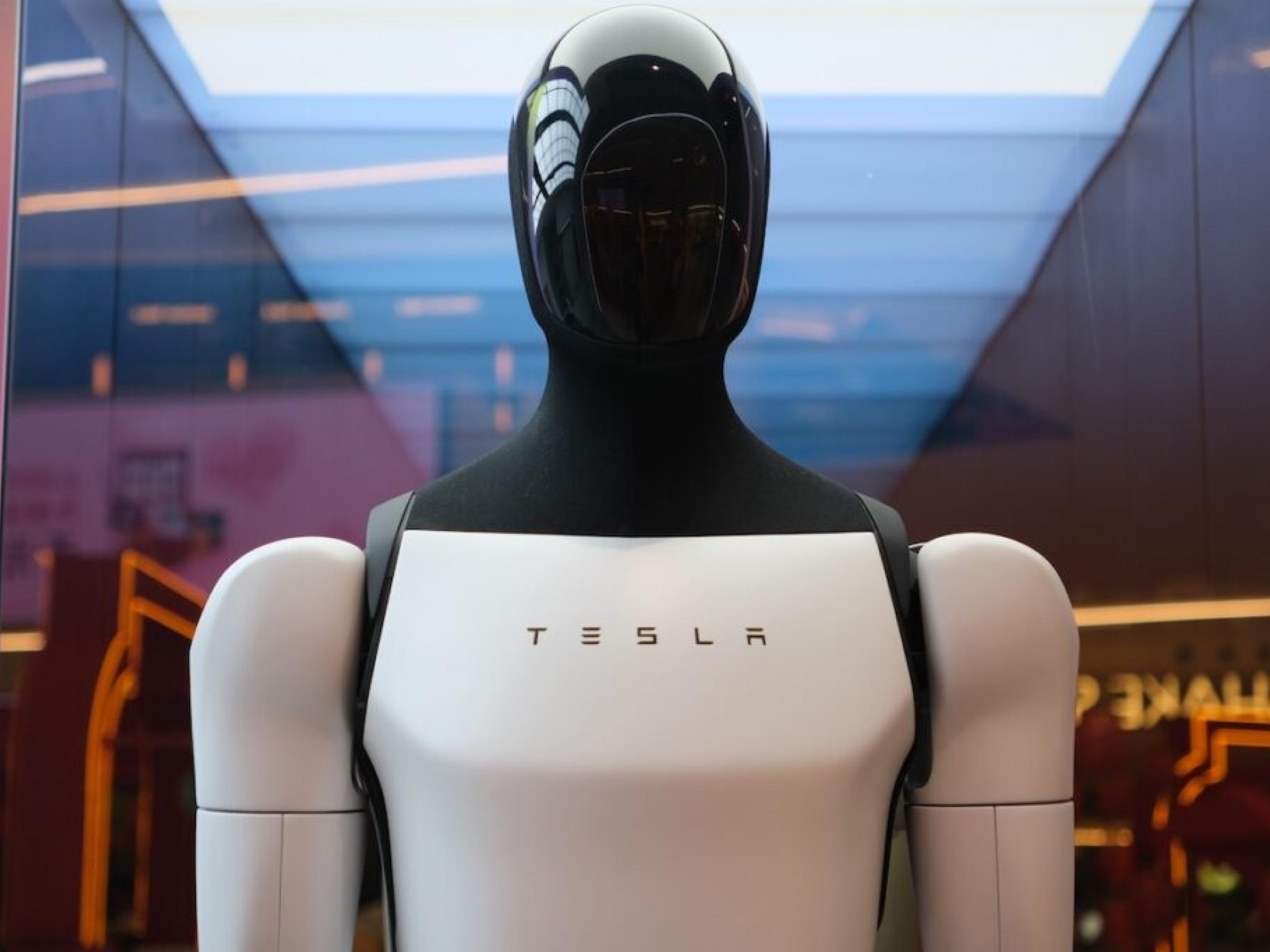
    That’d be bad enough if it weren’t just a car company trying to be something else. Its Optimus robot projects, for example, are stalling. And those long-promised robotaxis? They remain years behind rivals like Alphabet Inc‘s (NASDAQ:GOOG) Waymo, Uber Technologies Inc (NYSE:UBER) and Amazon.com Inc.‘s (NASDAQ:AMZN) subsidiary Zoox.

    Indeed, the chorus of boos is loud ahead of the company’s third-quarter earnings, which are to be announced on Wednesday. Still, Musk has plenty of like-minded business people cheering on his wild salary bump.

    See Also: Elon Musk’s ‘Stupid’ Actions Will Be Tesla’s ‘Nail In The Coffin,’ Ross Gerber Warns

    ISS Says ‘No,’ Wood Cries Socialism

    International Shareholder Services (ISS) opposes Musk’s pay package, citing “unmitigated concerns surrounding the special award’s magnitude and design.”

    If approved, the plan would become the most extensive CEO compensation package ever granted by a public company. It could potentially increase Musk’s stake in Tesla by 12% if the automaker reaches a market capitalization of $8.5 trillion in 10 years.

    But here’s the thing: Under Musk, Tesla experienced a decline in its global market share, which has dropped from about 23% to 18% over the past year. Its market capitalization remains strong at $1.4 trillion, though its stock price has faced significant volatility.

    ARK Invests‘ CEO Cathie Wood isn’t worried. She even criticized the ISS’s recommendation to vote against the pay package.

    “Isn’t it sad, if not damning, that institutional shareholders rely on proxy firms to tell them how they should vote? Index funds do no fundamental research, yet dominate institutional voting,” Wood said, calling index-based investing a “form of socialism.”

    Tesla Has Trouble Justifying Trillions

    The automaker’s $8 trillion market cap dream hinges on a narrative that Tesla is no longer just a car company but a futuristic AI powerhouse.

    “After a brutal few quarters we are finally starting to see stable demand trends for Tesla,” Wedbush analyst Dan Ives recently wrote. “The Tesla story going forward is around the AI transformation being led by the autonomous and robotics initiatives.”

    That narrative is fraying fast.

    The Optimus robot project is on pause. Milan Kovac, the head of engineering for Optimus, resigned in June, and a separate Optimus AI lead, Ashish Kumar, left the company in September to join Meta Platforms Inc (NASDAQ:META).

    Tesla is now pinning its hopes on a merger with Musk’s other PR-nightmare of a company, xAI.

    Whether Tesla can wield M&A to capture market share from its competition is not yet clear. Most mergers and acquisitions (M&A) transactions tend to fail in the long term.

    The deal won the endorsement of at least one other billionaire: Chamath Palihapitiya. The Social Capital founder even suggested including Musk’s other venture, SpaceX, in a three-way.

    “I’m here for it,” Palihapitiya, a Musk admirer, said.

    Musk’s rivals, meanwhile, are accelerating: BYD Co. Ltd. (OTC:BYDDY) (OTC:BYDDF) is selling EVs for a fifth of Tesla’s price. And Waymo’s autonomous vehicle (AV) fleet is already on the streets, slated to launch in London in 2026.

    As NYU professor Scott Galloway quipped on a recent podcast, Musk is “the David Copperfield of the modern economy” — and the magic may be fading.

    If Tesla deserves a trillion-plus valuation for lagging in autonomy, then Google, which owns Waymo, should be worth an extra trillion itself, Galloway’s co-host, Ed Elson, added.

    Regulatory Challenges

    Divisiveness within the Trump administration, which had an acrimonious breakup with Musk, could exacerbate Tesla’s challenges. The elimination of EV tax credits keeps the cars expensive. Recall how the company hyped up the lower-priced Model 3 Standard and Model Y Standard. Yes, it comes with fewer features than the traditional models, and the vehicles have cheaper price points than Tesla’s main vehicles.

    However, with the expiration of the federal EV tax credit, consumers are actually paying more for models with fewer features than they would have paid for the regular version before the tax credits were eliminated.

    The robotaxi segment is also in trouble. Trump’s NHTSA administrator nominee, Jonathan Morisson, has advocated for stricter oversight of self-driving vehicles, potentially clashing with Duffy’s approach. Meanwhile, Senator Josh Hawley (R-MO) plans to introduce legislation that would effectively ban fully autonomous driving, calling such vehicles “terrible for working people.”

    On the other hand, Tesla’s expansion aligns with Transportation Secretary Sean Duffy‘s announcement that the NHTSA will relax autonomous driving regulations, a move that bolsters Tesla’s robotaxi ambitions as federal standards evolve.

    “The rules of the road need to be updated to fit the realities of the 21st century,” Duffy said.

    Ironically, Musk doesn’t seem to like Duffy, calling him a “Dummy” when it comes to NASA.

    “The person responsible for America’s space program can’t have a 2-digit IQ,” Musk said

    Now Read:

    Image: Shutterstock

  • Why Coca-Cola Just Sold Most Of Its Africa Bottling Empire

    Why Coca-Cola Just Sold Most Of Its Africa Bottling Empire

    On Tuesday, Coca-Cola Company (NYSE:KO) and Gutsche Family Investments disclosed a deal to sell a 75% controlling stake in Coca-Cola Beverages Africa (CCBA) to Coca-Cola HBC AG for around $3.4 billion.

    Under the deal, The Coca-Cola Company will sell 41.52% of its 66.52% ownership in CCBA, while Coca-Cola HBC will also purchase the 33.48% stake held by Gutsche Family Investments.

    Notably, CCBA operates in 14 African countries and represents around 40% of all Coca-Cola product sales in the region.

    Also Read: Coca-Cola Q3 Preview: Will Warren Buffett’s Favorite Beverage Stock Post A Double Beat?

    The sale is expected to be completed by the end of 2026.

    Additionally, Coca-Cola and Coca-Cola HBC have entered into an option agreement that allows Coca-Cola HBC to acquire the remaining 25% interest in CCBA still held by Coca-Cola within six years after the deal closes.

    Management Commentary

    Henrique Braun, executive vice president and chief operating officer of Coca-Cola, said, “Coca-Cola HBC has demonstrated a strong track record of growing our system across Africa, having strong market share growth in Egypt and realizing strong volume and share growth in Nigeria over the past several years.”

    “We are pleased with Coca-Cola HBC’s continued and aligned investment in the Coca-Cola system and in taking another significant step forward in the refranchising of company-owned bottling operations.”

    Strategy Behind Sale

    Coca-Cola’s divestment in CCBA marks another major move in its ongoing strategy to refranchise company-owned and operated bottling businesses.

    As of 2024, bottling investments accounted for 13% of Coca-Cola’s consolidated net revenue, a sharp decline from 52% in 2015.

    Once the CCBA transaction is finalized, the company expects that figure to fall further to about 5%.

    In July 2025, Coca-Cola advanced its refranchising efforts in India by selling a 40% stake in Hindustan Coca-Cola Beverages Pvt. Ltd. to Jubilant Bhartia Group, while retaining a 60% ownership interest in the bottler.

    Coca-Cola plans to release quarterly results on Tuesday, October 21.

    Investors can gain exposure to the stock via iShares U.S. Consumer Staples ETF (NYSE:IYK) and Global X Funds Global X PureCap MSCI Consumer Staples ETF (NYSE:GXPS).

    Price Action: KO shares were trading higher by 0.22% to $68.60 premarket at last check Tuesday.

    Read Next:

    Image via Shutterstock

  • Trump’s $8.5 Billion Deal With Australia Challenges Chinese Dominance

    Trump’s $8.5 Billion Deal With Australia Challenges Chinese Dominance

    President Donald Trump and Australian Prime Minister Anthony Albanese on Monday signed a multibillion-dollar partnership at the White House. The goal is to secure the future of global critical mineral supply chains and strengthen defense cooperation.

    New Framework for Supply Chain Security

    The agreement, titled the “U.S.–Australia Framework for Securing of Supply in the Mining and Processing of Critical Minerals and Rare Earths,” establishes a bilateral response group to coordinate policy, investment, and project delivery.

    “President Trump and I agreed today we will work very hard together in both our nations’ interests. We have agreed today Australia and America are going to make more things together with our historic framework on critical minerals,” Albanese said.

    Also Read: Trump Likely To Invest In More Rare Earths, Bessent Says

    Commitment of Billions in Joint Investment

    The framework will channel billions in joint investment into mining, refining, and advanced manufacturing projects vital for defense and technology.

    The Export-Import Bank of the United States has issued seven Letters of Interest worth $2.2 billion, unlocking up to $5 billion in total investment. Furthermore, direct contributions from both governments will be $3 billion over six months, toward an $8.5 billion project pipeline.

    Australia’s superannuation funds are also expanding U.S. exposure, expected to rise to $1.44 trillion by 2035, fueling technology and energy ventures across both economies.

    Strengthening Defense Collaboration

    The deal also strengthens industrial defense collaboration, with additional Australian investment in Anduril underwater vehicles, Apache helicopters, and U.S.-made missile defense systems, reinforcing AUKUS cooperation.

    High-Priority Projects: Rare Earths and Gallium

    Two high-priority mining projects will receive immediate support. The first is Arafura Rare Earths’ (OTC:ARAFF) Nolans venture in the Northern Territory, which secured $100 million in equity. Its fully integrated “ore-to-oxide” model will enable processing onshore, ensuring a secure, transparent supply chain for Western defense industries.

    When complete, Nolans will supply roughly 5% of global rare earth demand, focusing on neodymium and praseodymium. These are key metals for missiles, electric vehicles, and fighter jet systems.

    The second project is Alcoa’s (NYSE:AA) Sojitz joint venture gallium recovery project in Wagerup, Western Australia. The project will receive $200 million in concessional equity from Canberra and matching support from Washington.

    It will extract gallium— a metal essential for semiconductors, radar systems, and defense electronics. Once operational, it will produce 100 metric tons per year, significantly reducing dependence on China, which currently dominates global gallium output.

    Analyst Commentary on China’s Market Dominance

    The latest note from Goldman Sachs points to this problem and its underlying risks. On Monday, the bank warned that China controls 69% of rare earth mining, 92% of refining, and 98% of magnet manufacturing. Analysts cautioned that even a 10% disruption could trigger $150 billion in global economic losses.

    Still, the US-Australia partnership is one of the best efforts to de-risk this market concentration.

    “Australia is really, really going to be helpful in the effort to take the global economy and make it less risky, less exposed to the kind of rare earth extortion that we’re seeing from the Chinese,” Kevin Hassett, director of the White House National Economic Council, said per The New York Times. 

    Price Action: AA stock was up 0.98% at $39.34 in premarket trading Tuesday, after closing 8.31% higher on Monday.

    Read Next:

    Image by Brian Jason via Shutterstock

  • Vanguard’s VOO ETF Shrugs Off Every Market Scare

    Vanguard’s VOO ETF Shrugs Off Every Market Scare

    Vanguard S&P 500 ETF (NYSE:VOO) has quietly become America’s go-to passive wager even while the very index that it tracks becomes riskier by the day.

    With the S&P 500 up almost 85% in the last three years, VOO has ballooned to more than $750 billion in assets, making it the world’s largest ETF. But behind that success is an irony: the most “diversified” fund in the market is more concentrated than ever.

    Ten mega-cap stocks, headed by Nvidia Corporation (NASDAQ:NVDA), Microsoft Corporation (NASDAQ:MSFT), and Apple Inc. (NASDAQ:AAPL), now constitute almost 40 % of the index. That’s a level of concentration not experienced since the dot-com bubble. So VOO’s “broad market exposure” is dominated by a few tech giants.

    That notwithstanding, VOO doesn’t seem bothered. Despite the escalating trade war with China, the U.S. federal government continuing an extended shutdown, and local banks reporting bad and phony loans, VOO is standing firm and shrugging off three full-blown catalysts that would typically send even the toughest bull winching.

    Also Read: High Stakes For VOO And SPY: The S&P 500’s Lofty Valuations Put ETF Strategies To Test

    Breaking It Down

    • Trade tensions escalating — the U.S. Treasury Secretary is to meet his Chinese counterpart in the face of new tariff threats and delisting Chinese companies.
    • Government shutdown impasse — the Senate again could not approve funding, extending the shutdown into double digits.
    • Banking trouble in the making — regional banks like Zions Bancorp and Western Alliance Bancorp are fighting loan-fraud and exposure problems.

    None of these has derailed VOO. It is up over 13% year to date, even with sideways trading in recent weeks. Also, according to data on Etfdb.com, the fund experienced inflows of $3.4 billion in the past 5 trading days, surpassing peers like SPDR S&P 500 ETF Trust (NYSE:SPY) and iShares Core S&P 500 ETF (NYSE:IVV).

    There is, however, a downside. While investors might enjoy the low-cost, sit-back ease of VOO (mere 0.03% expense ratio), they are, in effect, relying on the leading holdings continuing their reign and profit growth. The index’s elevated forward P/E (~22.4x) is reflecting the past. For instance, periods when the S&P 500 traded at over 22x have provided 10-year average annualized returns close to zero (around 3%).

    For the moment, VOO is the epitome of stability. But as concentration risk runs deeper, the low-cost index behemoth may soon be confronted with a paradox: too cheap to ignore, and too concentrated to resist.

    Read Next:

    Photo: Shutterstock

  • Small Caps Rally As Credit Fears Ease, Gold Rebounds To $4,350: What’s Moving Markets Monday?

    Small Caps Rally As Credit Fears Ease, Gold Rebounds To $4,350: What’s Moving Markets Monday?

    Wall Street kicked off the week on a strong footing, led by a rebound in small-cap stocks and regional banks, easing some of the credit-driven anxiety that shook markets last week.

    The Russell 2000 Index climbed 1.8% on Monday, outperforming large caps, as the SPDR Regional Banking ETF (NYSE:KRE) rose 2%, extending Friday’s 1.6% gain.

    The recovery comes after KRE plunged 6.2% on Thursday, its worst single-day drop since April, following fresh credit concerns tied to regional lenders.

    Large-cap benchmarks also posted solid gains. The Nasdaq 100 advanced 1.4% to 25,155, just shy of its all-time high of 25,195 set on Oct. 10. The S&P 500 gained 1.1% to 6,733, now within 0.5% of its record, while the Dow Jones Industrial Average added 1% to 46,630.

    Investor attention now turns to a packed earnings calendar. Key reports are due this week from Netflix Inc. (NASDAQ:NFLX), Tesla Inc. (NASDAQ:TSLA), Intel Corp. (NASDAQ:INTC), and International Business Machines Inc. (NYSE:IBM), along with industrial heavyweights GE Aerospace (NYSE:GE), GE Vernova (NYSE:GEV), Raytheon Technologies Corp. (NYSE:RTX) and T-Mobile US Inc. (NASDAQ:TMUS).

    Moderna Inc. (NASDAQ:MRNA) was the top gainer in the S&P 500, jumping over 7%, after announcing that new data on two investigational flu vaccines will be presented at IDWeek 2025, running from Oct. 19–22 in Atlanta.

    On the flip side, Seagate Technology Holdings plc (NASDAQ:STX)—up 145% year-to-date and one of the index’s best performers—was Monday’s biggest loser, as profit-taking pressure that began earlier this month continued to weigh on the stock.

    Gold prices rebounded 2.3% to $4,350, fully recovering Friday’s 1.8% pullback and pushing further into record territory amid ongoing macro uncertainty.

    The biggest surprise came from natural gas, with Henry Hub prices surging over 11% to $3.34, driven by a combination of colder weather forecasts and aggressive short covering.

    Meanwhile, oil extended its slide. West Texas Intermediate (WTI) crude fell 0.8% to $56.70 a barrel, inching closer to April lows of $55.10, the weakest level since February 2021, as surplus concerns continued to pressure the energy market.

    Monday’s Performance In Major US Indices, ETFs

    Major Indices Price %
    Russell 2000 2,497.24 1.8%
    Nasdaq 100 25,174.75 1.4%
    S&P 500 6,741.10 1.2%
    Dow Jones 46,664.30 1.0%
    Updated by 1:10 p.m. ET

    According to Benzinga Pro data:

    • The Vanguard S&P 500 ETF (NYSE:VOO) rose 1.1% to $617.46.
    • The SPDR Dow Jones Industrial Average (NYSE:DIA) rose 1.1% to $466.64.
    • The tech-heavy Invesco QQQ Trust Series (NASDAQ:QQQ) soared 1.4% to $612.33.
    • The iShares Russell 2000 ETF (NYSE:IWM) rallied 1.8% to $247.83.
    • The Technology Select Sector SPDR Fund (NYSE:XLK) outperformed, up 1.4%; the Utilities Select Sector SPDR Fund (NYSE:XLU) lagged, down 0.3%.

    Stocks scheduled to report earnings after the close include W.R. Berkley Corp. (NYSE:WRB), Crown Holdings Inc. (NYSE:CCK), AGNC Investment Corp. (NASDAQ:AGNC), Wintrust Financial Corp. (NASDAQ:WTFC), Zions Bancorporation (NASDAQ:ZION), BOK Financial Corp. (NASDAQ:BOKF), Cleveland-Cliffs Inc. (NYSE:CLF), and Cadence Bank (NYSE:BXS).

    S&P 500’s Top 5 Gainers On Monday

    Company Name % Change
    Moderna, Inc. +7.6%
    Robinhood Markets, Inc. (NASDAQ:HOOD) +7.40%
    Super Micro Computer, Inc. (NASDAQ:SMCI) +7.38%
    ON Semiconductor Corporation (NASDAQ:ON) +5.90%
    Jacobs Solutions Inc. (NYSE:J) +5.40%

    S&P 500’s Top 5 Losers On Monday

    Company Name Chg %
    Seagate Technology Holdings plc (NASDAQ:STX) -4.59%
    Oracle Corporation (NYSE:ORCL) -4.56%
    AppLovin Corporation (NASDAQ:APP) -4.11%
    Western Digital Corporation (NASDAQ:WDC) -3.68%
    Vistra Corp. (NYSE:VST) -3.03%

    Read Next:

    Image created using artificial intelligence via Midjourney.

  • Cleveland-Cliffs CEO Sees Steel Demand Rebound Thanks To ‘New Trade Environment’

    Cleveland-Cliffs CEO Sees Steel Demand Rebound Thanks To ‘New Trade Environment’

    Cleveland-Cliffs Inc. (NYSE:CLF) shares are trading higher premarket on Monday after the company reported third-quarter 2025 results.

    The steelmaker reported an adjusted loss of 45 cents per share, beating analysts’ expectations for a 48-cent loss.

    Revenue totaled $4.73 billion, missing the consensus estimate of $4.90 billion but up from $4.57 billion in the same quarter last year.

    Also Read: Cleveland-Cliffs Q3 Preview: Will Trump Get Praised By Company For Tariffs Again?

    Revenue was spread across automotive (30%), infrastructure and manufacturing (29%), distributors and converters (28%), and steel producers (13%). Liquidity stood at $3.1 billion as of September 30, 2025.

    Steelmaking revenue rose to $4.6 billion from $4.4 billion a year ago.

    Adjusted EBITDA came in at $143 million versus $122 million in the year-ago quarter.

    Key Metrics

    Steel shipments stood at 4.0 million net tons, up from 3.8 million in the third quarter of 2024.

    The average selling price fell slightly year-over-year to $1,032/ton from $1,045/ton in the same quarter a year ago.

    Product mix was led by hot-rolled (37%), coated (29%), cold-rolled (15%), and plate (6%) products, with the remainder split between stainless/electrical and other products such as slabs and rail.

    Management Commentary

    Cliffs’ Chairman, President and CEO, Lourenco Goncalves, said, “Our third quarter results marked a clear sign of demand recovery for automotive-grade steel made in the USA, and that is a direct consequence of the new trade environment implemented and enforced by the Trump Administration.”

    “As a result of this new trade environment, we have won new and growing supply arrangements with all major automotive OEMs, locking in multi-year agreements that reflect the reliability of our well-established supply chains anchored by our nine galvanizing plants dedicated to automotive-grade steels, with five of these plants specialized in exposed parts.”

    “This past quarter, we entered into a Memorandum of Understanding with a major global steel producer, which seeks to leverage our unmatched U.S. footprint and trade-compliant operations. We expect the ultimate outcome of this MoU to be highly accretive to our shareholders.”

    Outlook

    Cleveland-Cliffs expects steel unit costs in 2025 to decline by about $50 per net ton compared to 2024, adjusted for higher automotive shipping volumes.

    CLF updated its full-year 2025 outlook, with capital expenditures now expected to be around $525 million, down from the earlier forecast of $600 million.

    Also, the company projects selling, general, and administrative expenses at around $550 million, versus the previous estimate of $575 million.

    The third quarter performance was characterized by a richer sales mix and improved pricing, which contributed significantly to revenue and margin expansion. These factors were further supported by the company’s continued successful execution on cost management.

    The positive trend established is anticipated to accelerate into 2026. This expected acceleration is directly tied to the forthcoming expiration of the slab supply contract to ArcelorMittal, which is scheduled to conclude in early December.

    Price Action: Cleveland-Cliffs shares were up 10.81% at $14.76 during premarket trading on Monday. The stock is trading at a new 52-week high, according to Benzinga Pro data.

    Read Next:

    Photo by JHVEPhoto via Shutterstock

  • IBM Partners With Groq To Bring Lightning-Fast AI To Enterprises Worldwide

    IBM Partners With Groq To Bring Lightning-Fast AI To Enterprises Worldwide

    International Business Machines Corp. (NYSE:IBM) and Groq have announced a partnership to speed up enterprise use of agentic artificial intelligence.

    The deal integrates IBM’s watsonx Orchestrate with Groq’s high-performance inference platform, GroqCloud, to deliver faster, more cost-efficient AI capabilities across regulated and commercial industries.

    As part of the collaboration, IBM and Groq will combine Groq’s Language Processing Unit (LPU) architecture with watsonx Orchestrate, while enhancing Red Hat’s open-source vLLM technology to support IBM Granite models.

    Also Read: India’s Bharti Airtel Partners With IBM To Strengthen Cloud Offering

    The integration aims to provide clients with scalable infrastructure for deploying AI agents in real-world applications.

    Many companies struggle to transition from AI pilot projects to production due to cost and latency issues. GroqCloud, powered by its custom LPU, delivers more than five times faster inference than traditional GPU systems, maintaining low latency even as workloads scale globally.

    The system supports complex workflows in fields such as healthcare, where IBM’s AI agents can process large volumes of data and provide accurate, real-time responses.

    IBM clients are also using the Groq-powered system in human resources, retail, and financial services to automate processes and improve productivity. By combining Groq’s inference performance with IBM’s orchestration tools, the companies aim to make AI deployment faster and more reliable for enterprise customers.

    “Many large enterprise organizations have a range of options with AI inferencing when they’re experimenting, but when they want to go into production, they must ensure complex workflows can be deployed successfully to ensure high-quality experiences,” said Rob Thomas, IBM’s Senior Vice President of Software and Chief Commercial Officer.

    The announcement follows IBM’s move to roll out three new AI agents on Oracle’s platform, reflecting its broader push to enhance automation and interoperability across ecosystems. Access to GroqCloud through watsonx Orchestrate is available immediately, supporting secure and compliant AI deployment for global enterprises.

    Price Action: IBM shares were trading higher by 0.86% to $283.70 premarket at last check Monday.

    Read Next:

    Photo by JuliusKielaitis via Shutterstock

  • Citigroup, Mastercard, American Airlines Launch New AAdvantage Globe Travel Rewards Card

    Citigroup, Mastercard, American Airlines Launch New AAdvantage Globe Travel Rewards Card

    On Sunday, Citigroup, Inc. (NYSE:C), along with American Airlines Group, Inc. (NASDAQ:AAL) and Mastercard (NYSE:MA), unveiled a new mid-tier travel rewards credit card, Citi/AAdvantage Globe Mastercard.

    The new card expands the Citi/AAdvantage lineup, completing the range of co-branded travel credit cards offered under the partnership.

    The card is designed for travelers who fall between casual vacationers and frequent flyers categories.

    The card provides access to premium travel benefits, including four 24-hour Admirals Club Globe passes, expanded opportunities to earn AAdvantage miles and Loyalty Points, and an exclusive Flight Streak bonus.

    Also Read: JPMorgan Analyst Favors Visa Over Mastercard: Here’s Why

    Cardmembers can unlock more than $750 worth of travel and lifestyle rewards each year for an annual fee of $350.

    Management Commentary

    Scott Long, American’s Senior Vice President of AAdvantage said, “It’s built for the travelers who want more from every mile—with elevated benefits, faster path to status and powerful earning potential.”

    Pam Habner, Citi’s Head of U.S. Branded Cards and Lending added, “The launch of the Citi / AAdvantage Globe Mastercard is our first new co-branded credit card following the expansion of our partnership, marking a new chapter of innovation in our 38-year legacy,”

    Recent Earnings

    Last week, Citigroup had posted a third-quarter revenue of $22.09 billion, up 9% year over year and comfortably ahead of expectations, as strong performances across Markets, U.S. Personal Banking, and Investment Banking lifted results.

    Investors can gain exposure to the Citigroup stock via First Trust Nasdaq Bank ETF (NASDAQ:FTXO) and T. Rowe Price Financials ETF (NASDAQ:TFNS)

    Price Action: C shares are up 0.58% at $97.44 premarket at the last check on Monday.

    Read Next:

    Image via Shutterstock

  • Larry Ellison Says AI Needs Private Data — Palantir Says ‘Told You So’

    Larry Ellison Says AI Needs Private Data — Palantir Says ‘Told You So’

    When Oracle Corp‘s (NYSE:ORCL) Larry Ellison declared that artificial intelligence will only reach its “peak value” once models train on privately owned data, it sounded like a warning shot to the open-internet AI crowd. But for Palantir Technologies Inc. (NYSE:PLTR), it was validation in prime time.

    • Catch the action in PLTR stock here.

    “If you look at ChatGPT, Anthropic, Llama, Grok — they’re all trained on all of the data on the internet,” Ellison said during Oracle’s recent event. “But for these models to reach their peak value, you need to make privately owned data available to those models as well.”

    Palantir’s entire business has been built on that premise — that data locked inside governments and corporations is more valuable than anything scraped off the public web.

    Read Also: Palantir’s Monopoly Is Breaking – It’s No Longer Pentagon’s Only Favorite

    Private Data Is Palantir’s Power Source

    From defense agencies to Fortune 500 clients, Palantir’s Foundry and AIP platforms operate behind the firewall, structuring sensitive operational data for AI-driven decision making. That’s a crucial distinction in an era where generic language models often hallucinate without context or access to verified datasets.

    While ChatGPT and its peers chase scale, Palantir is chasing specificity — running proprietary AI models directly on clients’ secure data pools. Its government roots, spanning defense, intelligence and energy sectors, have given it years of experience managing classified data — precisely the private-data moat Ellison argues the AI industry must cross to mature.

    Ellison’s Thesis, Palantir’s Timing

    Ellison’s call couldn’t come at a better time for Palantir, which has pivoted from pure analytics to becoming the operating system for enterprise AI. Its partnerships with major corporations and U.S. agencies position it to capitalize on the growing recognition that private data, not internet noise, will drive the next leg of AI value creation.

    As investors sift through the next wave of AI winners, Ellison’s words echo a core Palantir advantage: it already sits where the most sensitive — and therefore most valuable — data lives.

    For AI’s second act, Palantir isn’t rewriting the script. It’s just been waiting for the rest of Silicon Valley to catch up.

    Read Next:

    Photo: drserg from Shutterstock