Category: Top Stories

  • Australia Courts US Backing To Break China’s Grip On Critical Minerals

    Australia Courts US Backing To Break China’s Grip On Critical Minerals

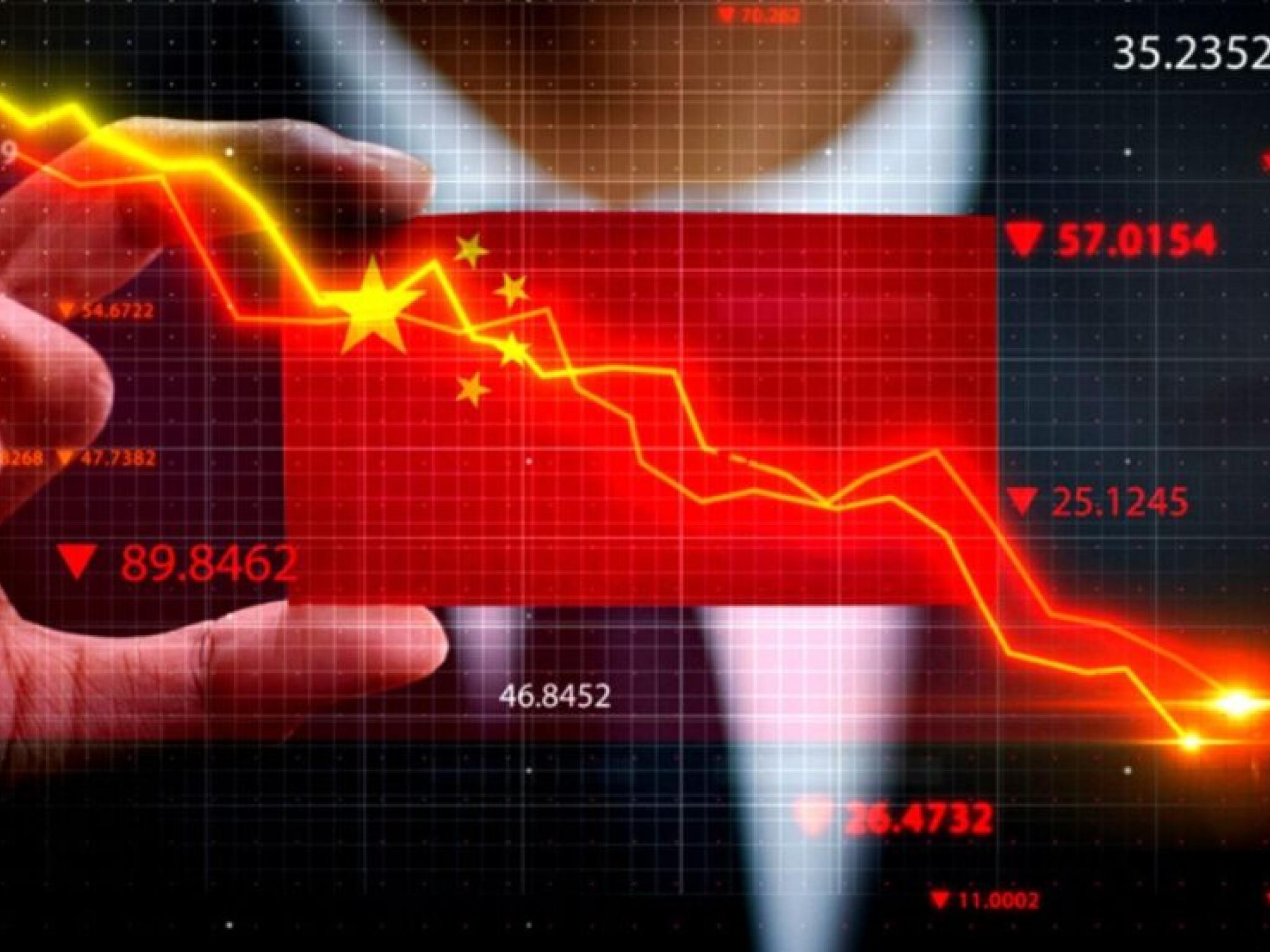
    Australia is pitching itself as a solution to the U.S. critical metal problems. The West has struggled to break China’s grip on the 50-odd “critical minerals” that are vital for electronics, renewables, defense systems, and more. However, Monday’s meeting between Australian Prime Minister Anthony Albanese and President Donald Trump might bring the two nations closer to bridging this commodities gap.

    Treasury Secretary Scott Bessent warned that China’s export restrictions signal “China versus the world,” according to the Financial Times. Bessent told Bloomberg that U.S. officials are in discussions with European allies, Australia, Canada, India, and other Asian democracies to coordinate a response.

    From Australia’s side the pitch is clear. The country offers massive deposits of lithium, rare earths and other strategic elements, coupled with a globally competitive mining sector and mining-engineering expertise.

    Also Read: China’s Rare Earth Policy Could ‘Backfire’, Warn Analysts While Highlighting Options Available To Trump: Beijing ‘May Find Itself Cut Off…’

    “Australia equals the periodic table. Having it is one thing — knowing how to mine it … is another — and we have the world’s biggest and best miners,” Australia’s Ambassador to the U.S., Kevin Rudd, said per Bloomberg.

    Rudd noted that the U.S. currently has a deficiency in many of the 50 designated critical minerals. With proper investment and offtake agreements, Australia “can meet 30 to 40 of those without much additional effort, most particularly in terms of processed rare earths.”

    According to The Guardian, Australia is offering the U.S. access to a proposed 1.2 billion Australian dollars ($780 million) critical minerals reserve as a signaling mechanism of trusted supply. Terms of such a deal are still uncertain, but even equity stakes are not out of the question. The U.S. government is increasingly willing to take equity stakes in strategic supply-chain companies. State-capitalism has re-entered mining sector, and Washington is not just a buyer — it may become a co-owner and strategic partner.

    Yet, Australia has its conditions. It needs U.S. investment, technology transfer, downstream refining capacity, offtake guarantees and security assurances—especially under the broader security umbrella of the AUKUS pact. Australia also wants to ensure that its resource diplomacy does not force it into a direct confrontation with China, its largest trading partner.

    These risks are exactly what former Prime Minister Paul Keating warned nearly four decades ago. The danger of Australia relying on digging rocks and letting advanced manufacturing slip away.

    “We took the view in the 1970s – it’s the old cargo-cult mentality, ‘we’ll just dig up another mound of rock and someone will buy it from us. If Australia is so undisciplined that it doesn’t deal with these fundamental problems … Then you are gone. You are a banana republic,” he said.

    Read Next:

    Image by RHJPhtotos via Shutterstock

  • Dimon Sees ‘Cockroaches’ In Banks—Here’s How To Protect Your Portfolio

    Dimon Sees ‘Cockroaches’ In Banks—Here’s How To Protect Your Portfolio

    Fresh fears of mounting credit stress in the U.S. banking system have resurfaced after JPMorgan Chase & Co. (NYSE:JPM) CEO Jamie Dimon issued a stark warning that more financial trouble could be lurking below the surface.

    “When you see one cockroach, there are probably more,” Dimon said during last week’s earnings call, referring to the recent bankruptcies of First Brands—an auto parts maker reportedly under criminal investigation—and Tricolor Holdings, a subprime auto lender.

    On Wednesday, just a day after Dimon’s warning, concerns deepened as Zions Bancorporation (NASDAQ:ZION) disclosed a $50 million charge-off tied to two troubled commercial loans from its California Bank & Trust unit.

    A day later, Western Alliance Bancorporation (NYSE:WAL) revealed it had filed a fraud lawsuit against a borrower, adding to the sector’s unease.

    Now, with regional banks and private equity showing signs of strain, Wall Street is bracing for what could be the next major shock to markets.

    Why Treasury Bonds Could Make A Comeback As Liquidity Tightens

    While many analysts believe these credit issues remain contained, the broader market may still be vulnerable—not because of credit exposure, but because of liquidity.

    Savita Subramanian, head of U.S. equity strategy at Bank of America, says regulated banks today are better capitalized and less likely to spark a full-blown credit crisis.

    However, she cautions that the S&P 500’s high concentration in a few large-cap tech names could make it more sensitive to liquidity shocks.

    That’s echoed by Michael Hartnett, chief investment strategist at Bank of America. In a recent note, he warned that “Krunchy Kredit” cracks are spreading, pointing to weakness in the SPDR Regional Banking ETF (NYSE:KRE), private credit, and the SPDR Insurance ETF (NYSE:KIE).

    He added that if key financial benchmarks drop below critical levels, the Fed could be forced to cut more aggressively.

    Hartnett is also turning bullish on bonds, suggesting that zero-coupon U.S. Treasuries could be the best hedge for credit event risk, with long-dated yields expected to fall below 4% amid Fed easing and global policy shifts away from quantitative tightening.

    The PIMCO 25+ Year Zero Coupon US Treasury Index ETF (NYSE:ZROZ) and the iShares 20+ Year Treasury Bond ETF (NASDAQ:TLT) are up 3.5% and 2.5%, respectively, thus far this month.

    Analysts Also Flag Russell 2000 Puts

    According to Jeff Jacobson, analyst at 22V Research, buying put options on small-cap stocks—tracked by the iShares Russell 2000 ETF (NYSE:IWM)—may be the best hedge if credit stress continues.

    IWM has traditionally had a strong correlation with regional banks (KRE) and private credit, both of which are flashing warning signs.

    Jacobson highlighted that while IWM outperformed both the SPDR S&P 500 ETF Trust (NYSE:SPY) and Invesco QQQ Trust (NASDAQ:QQQ) between August and mid-October, much of that gain was driven by capital goods, health care, software, tech, and utilities.

    At the same time, unprofitable small caps have outperformed their profitable peers—possibly a sign of speculative AI-related flows entering riskier territory.

    This divergence, he notes, could leave IWM vulnerable to a snapback if credit fears deepen and speculative excess unwinds.

    Bottom Line: How to Protect Your Portfolio

    As credit risks resurface—particularly in mid-sized banks and private credit markets—investors should stay on alert.

    Key financial benchmarks like KRE ETF, the Financials Select Sector SPDR Fund (NYSE:XLF), and KIE ETF can offer early signals of deeper stress in the system, and watching their movements may help identify mounting pressure in the sector.

    Long-duration Treasury bonds are increasingly viewed as potential hedges in the event of a broader liquidity stress, offering both safety and potential upside if yields fall further.

    So far, the damage has been limited to a few lenders.

    But if Dimon’s “cockroach” metaphor proves accurate, the market may not be fully priced for what’s still hiding in the shadows.

    Read Next:

    Photo: lev radin / Shutterstock.com

  • Leveraged ETF Boom Raises Red Flags, Expert Warns

    Leveraged ETF Boom Raises Red Flags, Expert Warns

    With the U.S. ETF market headed for a record-setting year of new product launches, fears are growing that the industry is sliding toward speculative excess. Morningstar analyst Daniel Sotiroff thinks leveraged ETFs are right in the middle of it.

    In the first nine months of 2025 alone, nearly 800 new ETFs have hit the market, surpassing 2024’s full-year record of 746. The total could top 1,000 before year-end, according to Reuters data, a staggering pace that has prompted even insiders to warn of “an unsustainable level of launches.”

    Sotiroff agrees, but with sharper words.

    “Most of the ETFs launched this year don’t really serve a legitimate long-term purpose,” he told Benzinga. “I suspect they’ll eventually shut down, though it may take longer than three years for some of them.”

    The Speculative Surge

    While industry leaders cite growing investor choice and innovation, Sotiroff sees something more troubling behind the wave of leveraged and single-stock ETF filings.

    “I don’t think it’s genuine investor demand or a supply gap,” he said. “A lot of these launches are aimed at creating speculative ETFs that attract naïve users. The creators and users are gambling and expecting a huge payoff. What they’re doing is the exact opposite of investing.”

    Leveraged ETFs — products designed to multiply daily returns, often by two or three times — have become increasingly aggressive. The recent filing by VolatilityShares to launch 5x leveraged ETFs tracking Bitcoin, Ethereum, Tesla Inc (NASDAQ:TSLA), Strategy Inc (NASDAQ:MSTR), and Solana shocked even veteran analysts.

    “That filing was mind-blowing,” Sotiroff said. “About half of the leveraged ETFs launched more than three years ago have shut down, and another 17% of them have lost 98% of their value. The 5x leveraged ETFs are just amplifying those risks.”

    A Market Of Extremes

    At the end of September, around 1,600 ETFs held less than $50 million in assets, a red flag for survival.

    “ETFs with very little AUM are the most vulnerable to shutting down,” Sotiroff noted. “I suspect most of those aren’t going to live very long.”

    While speculative enthusiasm remains, the segment’s scale is limited relative to the broader $13 trillion U.S. ETF market.

    “Leveraged and derivative-based ETFs are attracting some money,” Sotiroff said, “but they account for a relatively small segment of the net inflows across all ETFs.”

    Still, the combination of easy regulatory pathways, copycat product design, and retail speculation is fueling a market dynamic that Sotiroff believes will end badly for many participants. “Leveraged ETFs perform poorly over long periods,” he warned. “Eventually, the leverage works against them, and it becomes almost impossible for them to recover.”

    Retail At The Front Lines

    Financial advisers, meanwhile, remain wary of small or risky funds, leaving retail investors disproportionately exposed.

    “It’s not new for advisors to avoid small ETFs,” Sotiroff said. “Unfortunately, a lot of the leveraged ETFs have largely been aimed at retail investors who don’t know what they’re getting into.”

    As leveraged ETF filings continue to multiply, and issuers test the SEC’s appetite for even higher leverage, Sotiroff’s warning cuts through the noise: the ETF market may not be in a bubble yet, but parts of it are starting to look like a casino.

    Read Next:

    Photo: Shutterstock

  • XBP Global Partners With NYC To Modernize Parking Payments And Boost Efficiency

    XBP Global Partners With NYC To Modernize Parking Payments And Boost Efficiency

    XBP Global Holdings, Inc. (NASDAQ:XBP) stock jumped over 15% on a new six-year agreement with the New York City Department of Finance but gave back previous gains.

    The deal involves enhancing payment processing for parking violation tickets. As per the agreement, XBP will deploy its Lockbox Services platform to modernize the department’s payment operations.

    The partnership is expected to bring clear benefits to the residents, offering more payment options, faster processing, and enhanced security across the city’s parking payment system.

    The collaboration reflects the company’s commitment to leveraging automation to streamline public-sector financial transactions.

    Management Commentary

    Lakshmi Narayanan, President – Bills and Payments of XBP Global, added, “our solutions are designed to simplify transactions, strengthen security, and improve the overall customer experience with reduced cycle time for all consumers.”

    Recent Earnings

    In August, the company reported second-quarter revenue growth of 17.8% to $39.6 million and net loss from continuing operations of $3.4 million, versus a loss of $3.6 million a year ago.

    Price Action: XBP shares were trading lower by 3.55% to $0.4919 at last check Monday.

    Read Next:

    Photo by PeopleImages via Shutterstock

  • Norwegian Cruise Line Strikes 8-Year Renewable Fuel Deal With Repsol In Barcelona

    Norwegian Cruise Line Strikes 8-Year Renewable Fuel Deal With Repsol In Barcelona

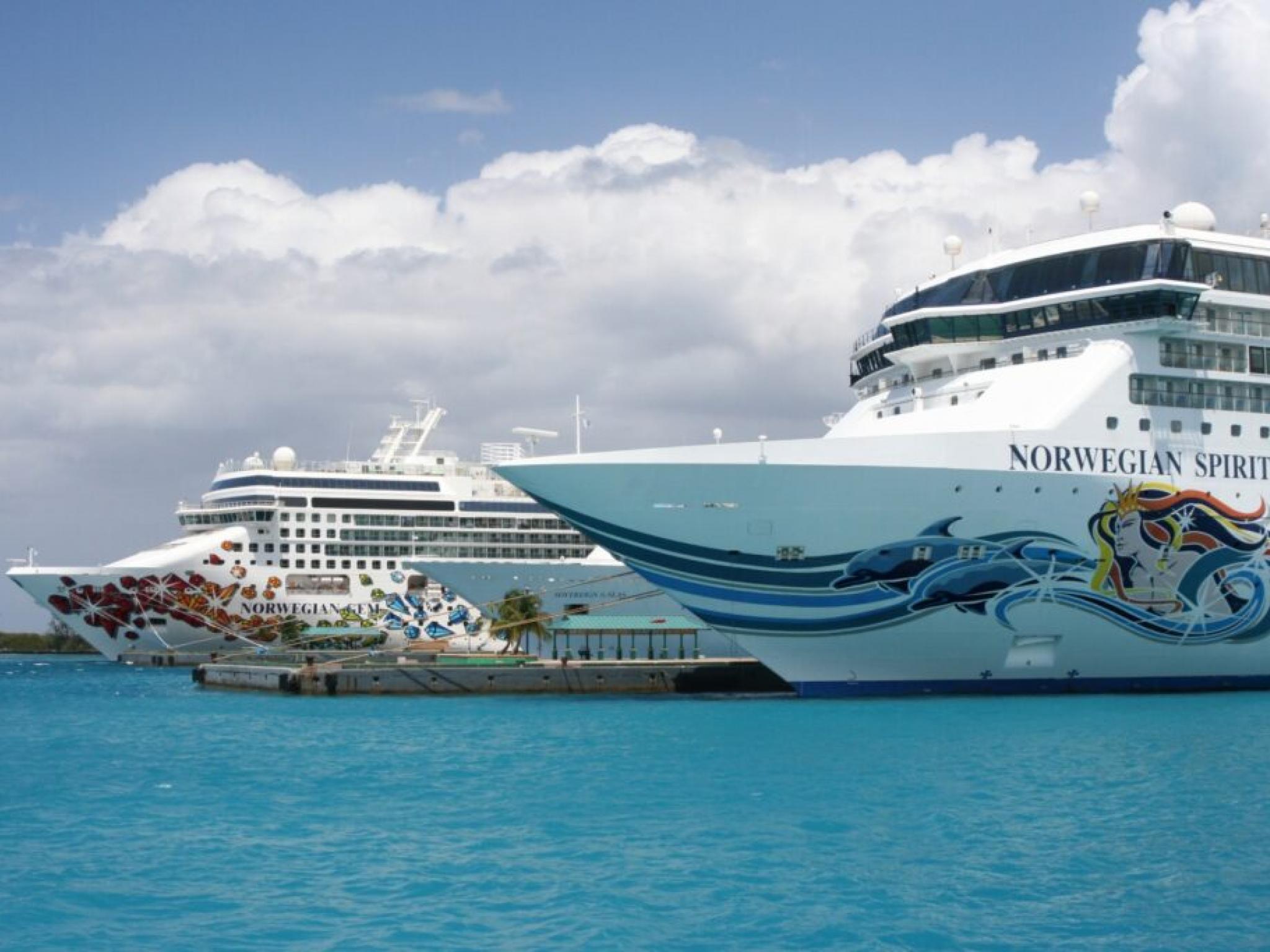
    Norwegian Cruise Line Holdings Ltd. (NYSE:NCLH) has entered an eight-year renewable marine fuel supply deal with Repsol SA (OTC:REPYY) at the Port of Barcelona, a first-of-its-kind long-term partnership in the cruise industry.

    Eight-Year Fuel Deal Targets Decarbonization

    The agreement will support the company’s decarbonization goals by introducing renewable biofuels in 2026 and renewable methanol starting in 2029 across its Norwegian Cruise Line, Oceania Cruises, and Regent Seven Seas Cruises fleets.

    Repsol will supply certified renewable fuels that align with EU sustainability standards and both companies’ commitment to achieving net-zero emissions by 2050.

    Read Next: Looking Into Norwegian Cruise Line Holdings Ltd’s Recent Short Interest

    The deal directly supports Norwegian’s Sail & Sustain program, which targets a 10% reduction in greenhouse gas intensity by 2026 and 25% by 2030.

    Executive Commentary on Cross-Sector Partnership

    Harry Sommer, president and CEO of Norwegian Cruise Line Holdings, said the partnership shows how cross-sector cooperation can accelerate sustainability goals.

    “Securing long-term access to renewable marine fuels at a key European port aligns directly with our Sail & Sustain program and demonstrates our commitment to advancing towards a more sustainable future,” Sommer said.

    Repsol’s Renewable Methanol Production

    Repsol will produce renewable methanol at its Ecoplanta facility in Tarragona, Spain, which will convert municipal waste into renewable fuels.

    The facility, expected to open in 2029, will process roughly 400,000 tons of waste annually to create about 240,000 tons of renewable fuels and circular products.

    Repsol’s renewable fuel network already includes large-scale facilities in Cartagena and Puertollano, Spain, and the company aims to expand its renewable fuel stations in Spain and Portugal to 1,500 by year-end.

    Norwegian Cruise Line Holdings said the partnership will help it adopt cleaner energy solutions without requiring major ship modifications, marking a step toward reducing the cruise industry’s environmental footprint.

    The announcement follows recent market volatility for Norwegian Cruise Line Holdings, which faced a dip after analysts cited margin pressure and softer pricing trends.

    Despite those headwinds, the new partnership underscores the company’s long-term focus on low-carbon solutions and operational efficiency.

    Price Action: NCLH shares were trading higher by 1.37% to $23.26 at last check Monday.

    Read Next:

    Photo via Shutterstock