Category: Top Stories

  • Cleveland-Cliffs CEO Sees Steel Demand Rebound Thanks To ‘New Trade Environment’

    Cleveland-Cliffs CEO Sees Steel Demand Rebound Thanks To ‘New Trade Environment’

    Cleveland-Cliffs Inc. (NYSE:CLF) shares are trading higher premarket on Monday after the company reported third-quarter 2025 results.

    The steelmaker reported an adjusted loss of 45 cents per share, beating analysts’ expectations for a 48-cent loss.

    Revenue totaled $4.73 billion, missing the consensus estimate of $4.90 billion but up from $4.57 billion in the same quarter last year.

    Also Read: Cleveland-Cliffs Q3 Preview: Will Trump Get Praised By Company For Tariffs Again?

    Revenue was spread across automotive (30%), infrastructure and manufacturing (29%), distributors and converters (28%), and steel producers (13%). Liquidity stood at $3.1 billion as of September 30, 2025.

    Steelmaking revenue rose to $4.6 billion from $4.4 billion a year ago.

    Adjusted EBITDA came in at $143 million versus $122 million in the year-ago quarter.

    Key Metrics

    Steel shipments stood at 4.0 million net tons, up from 3.8 million in the third quarter of 2024.

    The average selling price fell slightly year-over-year to $1,032/ton from $1,045/ton in the same quarter a year ago.

    Product mix was led by hot-rolled (37%), coated (29%), cold-rolled (15%), and plate (6%) products, with the remainder split between stainless/electrical and other products such as slabs and rail.

    Management Commentary

    Cliffs’ Chairman, President and CEO, Lourenco Goncalves, said, “Our third quarter results marked a clear sign of demand recovery for automotive-grade steel made in the USA, and that is a direct consequence of the new trade environment implemented and enforced by the Trump Administration.”

    “As a result of this new trade environment, we have won new and growing supply arrangements with all major automotive OEMs, locking in multi-year agreements that reflect the reliability of our well-established supply chains anchored by our nine galvanizing plants dedicated to automotive-grade steels, with five of these plants specialized in exposed parts.”

    “This past quarter, we entered into a Memorandum of Understanding with a major global steel producer, which seeks to leverage our unmatched U.S. footprint and trade-compliant operations. We expect the ultimate outcome of this MoU to be highly accretive to our shareholders.”

    Outlook

    Cleveland-Cliffs expects steel unit costs in 2025 to decline by about $50 per net ton compared to 2024, adjusted for higher automotive shipping volumes.

    CLF updated its full-year 2025 outlook, with capital expenditures now expected to be around $525 million, down from the earlier forecast of $600 million.

    Also, the company projects selling, general, and administrative expenses at around $550 million, versus the previous estimate of $575 million.

    The third quarter performance was characterized by a richer sales mix and improved pricing, which contributed significantly to revenue and margin expansion. These factors were further supported by the company’s continued successful execution on cost management.

    The positive trend established is anticipated to accelerate into 2026. This expected acceleration is directly tied to the forthcoming expiration of the slab supply contract to ArcelorMittal, which is scheduled to conclude in early December.

    Price Action: Cleveland-Cliffs shares were up 10.81% at $14.76 during premarket trading on Monday. The stock is trading at a new 52-week high, according to Benzinga Pro data.

    Read Next:

    Photo by JHVEPhoto via Shutterstock
  • IBM Partners With Groq To Bring Lightning-Fast AI To Enterprises Worldwide

    IBM Partners With Groq To Bring Lightning-Fast AI To Enterprises Worldwide

    International Business Machines Corp. (NYSE:IBM) and Groq have announced a partnership to speed up enterprise use of agentic artificial intelligence.

    The deal integrates IBM’s watsonx Orchestrate with Groq’s high-performance inference platform, GroqCloud, to deliver faster, more cost-efficient AI capabilities across regulated and commercial industries.

    As part of the collaboration, IBM and Groq will combine Groq’s Language Processing Unit (LPU) architecture with watsonx Orchestrate, while enhancing Red Hat’s open-source vLLM technology to support IBM Granite models.

    Also Read: India’s Bharti Airtel Partners With IBM To Strengthen Cloud Offering

    The integration aims to provide clients with scalable infrastructure for deploying AI agents in real-world applications.

    Many companies struggle to transition from AI pilot projects to production due to cost and latency issues. GroqCloud, powered by its custom LPU, delivers more than five times faster inference than traditional GPU systems, maintaining low latency even as workloads scale globally.

    The system supports complex workflows in fields such as healthcare, where IBM’s AI agents can process large volumes of data and provide accurate, real-time responses.

    IBM clients are also using the Groq-powered system in human resources, retail, and financial services to automate processes and improve productivity. By combining Groq’s inference performance with IBM’s orchestration tools, the companies aim to make AI deployment faster and more reliable for enterprise customers.

    “Many large enterprise organizations have a range of options with AI inferencing when they’re experimenting, but when they want to go into production, they must ensure complex workflows can be deployed successfully to ensure high-quality experiences,” said Rob Thomas, IBM’s Senior Vice President of Software and Chief Commercial Officer.

    The announcement follows IBM’s move to roll out three new AI agents on Oracle’s platform, reflecting its broader push to enhance automation and interoperability across ecosystems. Access to GroqCloud through watsonx Orchestrate is available immediately, supporting secure and compliant AI deployment for global enterprises.

    Price Action: IBM shares were trading higher by 0.86% to $283.70 premarket at last check Monday.

    Read Next:

    Photo by JuliusKielaitis via Shutterstock

  • Citigroup, Mastercard, American Airlines Launch New AAdvantage Globe Travel Rewards Card

    Citigroup, Mastercard, American Airlines Launch New AAdvantage Globe Travel Rewards Card

    On Sunday, Citigroup, Inc. (NYSE:C), along with American Airlines Group, Inc. (NASDAQ:AAL) and Mastercard (NYSE:MA), unveiled a new mid-tier travel rewards credit card, Citi/AAdvantage Globe Mastercard.

    The new card expands the Citi/AAdvantage lineup, completing the range of co-branded travel credit cards offered under the partnership.

    The card is designed for travelers who fall between casual vacationers and frequent flyers categories.

    The card provides access to premium travel benefits, including four 24-hour Admirals Club Globe passes, expanded opportunities to earn AAdvantage miles and Loyalty Points, and an exclusive Flight Streak bonus.

    Also Read: JPMorgan Analyst Favors Visa Over Mastercard: Here’s Why

    Cardmembers can unlock more than $750 worth of travel and lifestyle rewards each year for an annual fee of $350.

    Management Commentary

    Scott Long, American’s Senior Vice President of AAdvantage said, “It’s built for the travelers who want more from every mile—with elevated benefits, faster path to status and powerful earning potential.”

    Pam Habner, Citi’s Head of U.S. Branded Cards and Lending added, “The launch of the Citi / AAdvantage Globe Mastercard is our first new co-branded credit card following the expansion of our partnership, marking a new chapter of innovation in our 38-year legacy,”

    Recent Earnings

    Last week, Citigroup had posted a third-quarter revenue of $22.09 billion, up 9% year over year and comfortably ahead of expectations, as strong performances across Markets, U.S. Personal Banking, and Investment Banking lifted results.

    Investors can gain exposure to the Citigroup stock via First Trust Nasdaq Bank ETF (NASDAQ:FTXO) and T. Rowe Price Financials ETF (NASDAQ:TFNS)

    Price Action: C shares are up 0.58% at $97.44 premarket at the last check on Monday.

    Read Next:

    Image via Shutterstock

  • Larry Ellison Says AI Needs Private Data — Palantir Says ‘Told You So’

    Larry Ellison Says AI Needs Private Data — Palantir Says ‘Told You So’

    When Oracle Corp‘s (NYSE:ORCL) Larry Ellison declared that artificial intelligence will only reach its “peak value” once models train on privately owned data, it sounded like a warning shot to the open-internet AI crowd. But for Palantir Technologies Inc. (NYSE:PLTR), it was validation in prime time.

    • Catch the action in PLTR stock here.

    “If you look at ChatGPT, Anthropic, Llama, Grok — they’re all trained on all of the data on the internet,” Ellison said during Oracle’s recent event. “But for these models to reach their peak value, you need to make privately owned data available to those models as well.”

    Palantir’s entire business has been built on that premise — that data locked inside governments and corporations is more valuable than anything scraped off the public web.

    Read Also: Palantir’s Monopoly Is Breaking – It’s No Longer Pentagon’s Only Favorite

    Private Data Is Palantir’s Power Source

    From defense agencies to Fortune 500 clients, Palantir’s Foundry and AIP platforms operate behind the firewall, structuring sensitive operational data for AI-driven decision making. That’s a crucial distinction in an era where generic language models often hallucinate without context or access to verified datasets.

    While ChatGPT and its peers chase scale, Palantir is chasing specificity — running proprietary AI models directly on clients’ secure data pools. Its government roots, spanning defense, intelligence and energy sectors, have given it years of experience managing classified data — precisely the private-data moat Ellison argues the AI industry must cross to mature.

    Ellison’s Thesis, Palantir’s Timing

    Ellison’s call couldn’t come at a better time for Palantir, which has pivoted from pure analytics to becoming the operating system for enterprise AI. Its partnerships with major corporations and U.S. agencies position it to capitalize on the growing recognition that private data, not internet noise, will drive the next leg of AI value creation.

    As investors sift through the next wave of AI winners, Ellison’s words echo a core Palantir advantage: it already sits where the most sensitive — and therefore most valuable — data lives.

    For AI’s second act, Palantir isn’t rewriting the script. It’s just been waiting for the rest of Silicon Valley to catch up.

    Read Next:

    Photo: drserg from Shutterstock

  • Datavault AI Teams Up With Max International To Tokenize Real-World Assets In Switzerland

    Datavault AI Teams Up With Max International To Tokenize Real-World Assets In Switzerland

    Datavault AI Inc. (NASDAQ:DVLT) saw its shares surge in premarket trading on Monday after announcing a landmark partnership with Max International AG.

    Bridging Blockchain and Institutional Finance

    The collaboration will establish a Switzerland-based exchange for tokenized real-world assets, marking a major step in the company’s mission to bridge blockchain technology with institutional finance.

    The deal highlights growing investor optimism around compliant, AI-driven digital asset platforms. The partnership aims to accelerate institutional adoption of real-world assets (RWAs) by resolving key barriers such as regulatory complexity, scalability, and fiduciary trust.

    Also Read: Datavault AI Stock’s Face-Melting 720% Rally—What To Know

    It also underpins Datavault AI’s International Elements Exchange, focused on tokenizing commodities like unmined gold and copper, and the International NIL Exchange, which monetizes name, image, and likeness rights.

    Switzerland as Operational Hub

    Zurich, known for its dominance in global gold refining and financial infrastructure, will serve as the operational center of the exchange.

    Switzerland’s progressive digital asset regulations and Datavault AI’s international patent portfolio, spanning data tokenization, digital twins, and automated compliance, will enable transparent, scalable trading within a regulated ecosystem.

    Datavault AI’s proprietary DataValue and DataScore systems are designed to enhance liquidity and improve valuation accuracy for illiquid assets.

    Max International AG’s Swiss domicile provides regulated oversight and fiduciary governance, ensuring institutional-grade compliance for global participants.

    CEO Highlights Growing Market Demand

    Nathaniel Bradley, CEO of Datavault AI, added, “We have been approached by large corporations and governments to address growing demand for blockchain-driven solutions to RWA and NIL monetization—making the complex consumable and giving way to a simple tokenized, automated, fail-proof compliant scale.”

    With tokenized assets projected to surpass $1 trillion by 2030, the Swiss partnership reinforces Datavault AI’s strategy to build compliant infrastructure for digital asset trading.

    The venture follows Datavault AI’s acquisition of NYIAX, a deal that aimed to fuse AI and blockchain to strengthen asset monetization frameworks. Together, these initiatives position Datavault AI as a frontrunner in the regulated tokenization of real-world assets.

    Price Action: DVLT shares were trading higher by 15.08% to $2.06 premarket at last check Monday.

    Read Next:

    Image by Below the Sky via Shutterstock

  • Microsoft Gears Up For Bigger AI Push With Rising Capex And Cloud Confidence

    Microsoft Gears Up For Bigger AI Push With Rising Capex And Cloud Confidence

    Microsoft Corporation (NASDAQ:MSFT) is seeing renewed momentum in its crucial cloud business, primarily fueled by robust demand for security services within Azure.

    This strength comes as the tech giant prepares for its fiscal first-quarter 2026 earnings release on October 29, 2025, and points toward a future requiring significantly higher capital expenditure.

    Upbeat Forecasts Ahead of Earnings

    Reflecting this optimism, Bank of America Securities analyst Brad Sills maintained a Buy rating on Microsoft, accompanied by a price forecast of $640.

    Also Read: Microsoft’s New AI Lab Powers Wisconsin Manufacturing

    Channel partners report a consistent pace of deal activity and increasing enterprise investment in AI and data infrastructure, signaling enduring corporate confidence in Microsoft’s central role in technology roadmaps, Sills noted.

    The analyst said most partners reported results that were inline or better, supporting his expectation for up to 1% upside to the $77 billion revenue estimate — up 18.2% year-over-year (16.2% in constant currency or cc).

    He expects Azure growth of 39% (38% cc) versus a base case of 38% (37% cc), noting that while Azure’s performance was broadly inline, security strength offset some softness in workloads affected by capacity constraints and customers taking more time to build long-term AI roadmaps.

    Sills views both factors as positive for Microsoft’s deeper enterprise integration.

    The analyst projects Productivity and Business Processes (PBP) growth of 22.7% (21.7% cc) versus a 22.2% (21.2% cc) base case, driven by steady momentum in E3/E5 commercial Office licenses.

    AI Infrastructure and Capex Outlook

    He said Microsoft continues to take a strategic, measured approach to expanding AI infrastructure while balancing scale and energy independence.

    Sills cited growing visibility into compute investments, including Microsoft’s role in the Aligned Data Centers acquisition with BlackRock, Inc. (NYSE:BLK) and Nvidia Corporation (NASDAQ:NVDA), as evidence of durable demand despite Azure’s current capacity limits.

    The analyst expects upward revisions to fiscal 2026 capex forecasts from consensus at $115 billion (36% of revenue) to around $125 billion (38% of revenue).

    Despite the stock lagging since fourth-quarter results (down 4% versus Nasdaq +6%), he views potential capex revisions as a key catalyst.

    Sills also flagged two additional drivers including potential margin expansion through fiscal 2026 and accelerating commercial Office growth, expected to rise from 14% due to continued E3/E5 and Copilot adoption.

    The analyst called Microsoft a top pick and an AI leader across both applications and infrastructure. Channel partners echoed his view, citing strong Azure, AI, and security momentum.

    Sills projected fiscal 2026 sales of $322.1 billion and EPS of $15.24. He expects first-quarter sales of $77.5 billion and EPS of $3.64.

    MSFT Price Action: MSFT stock was trading higher by 0.66% to $516.97 at last check Monday.

    Read Next:

    Photo by Mamun_Sheikh via Shutterstock

  • Alibaba Leads Goldman’s Top Chinese Picks For Global Growth

    Alibaba Leads Goldman’s Top Chinese Picks For Global Growth

    Goldman Sachs urged investors to focus on Chinese companies expanding overseas, citing a weaker yuan, cost advantages, and China’s strength in global supply chains as growth catalysts.

    In a report led by analysts Si Fu and Kinger Lau, Goldman identified 25 top picks, including Alibaba Group Holding Ltd (NYSE:BABA), Contemporary Amperex Technology Co Ltd (CATL), and BYD Co Ltd (OTC:BYDDY) (OTC:BYDDF), as key beneficiaries of this “going global” trend.

    Goldman said these companies — spanning e-commerce, capital goods, and healthcare — have already gained nearly 40% year-to-date, outperforming the Hang Seng Index’s 29% and the CSI 300 Index’s 16% rise, SCMP reported on Monday.

    Also Read: Alibaba Stock Surges 95% As Company Doubles Down On AI, Cloud

    Overseas Expansion to Boost Earnings Growth

    The bank expects its overseas expansion to accelerate earnings growth by about 1.5% annually through 2028 as firms diversify beyond China’s saturated domestic market.

    Goldman highlighted Alibaba’s overseas revenue doubling to 13% in 2023 from 7% in 2021 and CATL’s climbing to 30% from 21%, reflecting their rising global competitiveness.

    While Goldman acknowledged that potential 100% U.S. tariffs under Trump’s trade agenda could trim short-term profits by around 10%, it said Chinese firms’ international diversification should offset the impact over time.

    Alibaba Stock Soars on AI and Cloud Momentum

    Alibaba is considered the tech barometer of China. The stock gained 97% year-to-date, topping NYSE Composite index’s over 12% returns as its cloud unit and AI model integration across its business segments and other enterprises fuel upside for the stock.

    Goldman Sachs, Daiwa Securities, and China International Capital Corporation (CICC) expressed optimism over Alibaba’s cloud growth, AI breakthroughs, and early e-commerce recovery as key catalysts behind its rally.

    Goldman Sachs raised its cloud revenue growth forecasts to 31–38% through fiscal 2028, citing advances in multimodal AI models and a diversified chip supply.

    Daiwa Securities projected Alibaba Cloud revenue to climb 30% year-over-year in the second quarter of fiscal 2026 and expects operating losses to peak soon before narrowing on lower marketing and logistics costs.

    CICC forecast 3.8% revenue growth for the same quarter and 30% cloud growth, saying new AI products and hardware unveiled at Alibaba’s Apsara Conference will support sustained profit gains.

    Price Action: BABA stock was trading lower by 0.62% to $166.02 premarket at last check Monday.

    Read Next:

    Photo by Tada Images via Shutterstock

  • Snowflake Poised For Major AI Driven Growth: Analyst

    Snowflake Poised For Major AI Driven Growth: Analyst

    Snowflake Inc (NYSE:SNOW) is gaining momentum as it sharpens its go-to-market strategy and scales its cloud platform to meet soaring enterprise demand for artificial intelligence solutions, driving stronger deal flow and deeper integration across industries.

    The company continues to expand its AI Data Cloud, with half of new customers using Snowflake for AI workloads and 25% engaging its AI capabilities weekly.

    It is a sign that its innovation engine and partnerships, are fueling long-term growth in the fast-evolving data infrastructure market.

    Also Read: Snowflake’s Palantir Deal Is Key To Unlock Massive AI, Government Data Opportunities: Analyst

    Analyst Take

    Wedbush analyst Daniel Ives maintained Snowflake with an Outperform rating and raised the price forecast from $250 to $270.

    Ives cited accelerating momentum as the company fine-tunes its go-to-market strategy and scales its platform through stronger engineering, innovation, and marketing execution.

    The analyst said Snowflake still has significant room to expand as it integrates simplicity and scalability across its data cloud, positioning itself to capture a larger share of the AI market opportunity.

    He emphasized that Snowflake remains in the early stages of monetizing AI demand, with a growing share of its customer base leveraging the platform for advanced AI use cases.

    Ives commented that half of new customers now use Snowflake for AI-related workloads, while approximately 25% of existing organizations rely on Snowflake’s AI capabilities on a weekly basis.

    Snowflake continues to enhance its Cortex platform, focusing on improving retrieval quality and unifying data early in the lifecycle to optimize workflows and drive efficiency, the analyst told.

    AI

    Despite facing intense competition in a multi-trillion-dollar AI and data infrastructure market, he believes Snowflake’s “innovation engine” remains a major differentiator.

    Ives highlighted that enterprises are increasingly adopting Snowflake’s easy-to-use AI products to streamline operations, boost productivity, and consolidate data workflows across cloud environments.

    The analyst said Snowflake is still in the early innings of modernizing data infrastructure for the generative AI era, with large enterprises across sectors turning to the platform for data preparation, analytics, and storage.

    The company continues to expand its data engine by combining analytical and transactional capabilities and allowing users to act on larger datasets that historically existed outside Snowflake’s environment, he said.

    Ives noted that Snowflake’s AI Data Cloud has evolved into a connected ecosystem of shared data applications, with thousands of customers securely collaborating via the Snowflake Marketplace.

    This ecosystem supports enterprise-grade performance and cross-industry data sharing, the analyst noted.

    Palantir Partnership

    Ives also pointed to Snowflake’s strategic partnership with Palantir Technologies Inc (NYSE:PLTR) as a growth catalyst.

    The integration of Snowflake’s Data Cloud with Palantir’s Foundry and AIP platforms enables faster analytics, stronger data pipelines, and more trusted AI-driven applications for commercial and federal clients,as per Ives.

    The analyst called Snowflake a “second-derivative winner” of the AI boom and one of Wedbush’s top picks in its AI 30 list, expecting it to capitalize on growing AI adoption over the next 12 to 18 months.

    Ives projected third-quarter revenue of $1.18 billion and EPS of $0.35. He projected fiscal 2026 revenue of $4.61 billion and EPS of $1.30.

    SNOW Price Action: Snowflake shares were up 1.20% at $243.64 at the time of publication on Monday. The stock is approaching its 52-week high of $255.39, according to Benzinga Pro data.

    Read Next:

    Photo by Tada Images via Shutterstock

  • Gucci’s Owner Sells Beauty Arm To L’Oréal In $4.6 Billion Deal

    Gucci’s Owner Sells Beauty Arm To L’Oréal In $4.6 Billion Deal

    French luxury group Kering SA (OTC:PPRUF) (OTC:PPRUY)  on Sunday disclosed a long-term partnership with L’Oréal (OTC:LRLCF) in the luxury beauty and wellness segment.

    As per the agreement, the Gucci-owner will sell its Kering Beauté business to L’Oréal for 4 billion euros ($4.66 billion) in cash.

    L’Oréal will acquire the iconic high-end luxury fragrance brand, House of Creed, and gain exclusive beauty and fragrance licenses for several Kering brands.

    Also Read: Gen Z Is Rewriting Luxury — Can KLXY And FINE ETFs Keep Up?

    Under L’Oréal Luxe, Creed will expand its global reach in both men’s and women’s luxury fragrance markets.

    The transaction is expected to close in the first half of 2026, with L’Oréal paying royalties to Kering for its licensed brands.

    50-Year Exclusive Brand Licenses

    The partnership grants L’Oréal exclusive 50-year licenses to create, develop, and distribute fragrance and beauty products for Gucci, Bottega Veneta, and Balenciaga.

    The Gucci license will begin after the current Coty agreement ends, while the Bottega Veneta and Balenciaga licenses will take effect upon the transaction’s closing.

    Joint Venture in Luxury Wellness and Longevity

    Beyond beauty, Kering and L’Oréal also plan to form a 50/50 joint venture to explore opportunities in luxury, wellness, and longevity.

    The partnership will combine L’Oréal’s innovation expertise with Kering’s luxury market insight to create advanced experiences and services for high-end consumers.

    Management Commentary

    Luca de Meo, CEO of Kering, said, “Joining forces with the global leader in beauty, we will accelerate the development of fragrance and cosmetics for our major Houses, allowing them to achieve scale in this category and unlock their immense long-term potential, as did Yves Saint Laurent Beauté under L’Oréal’s stewardship.”

    Read Next:

    Photo by Below the Sky via Shutterstock

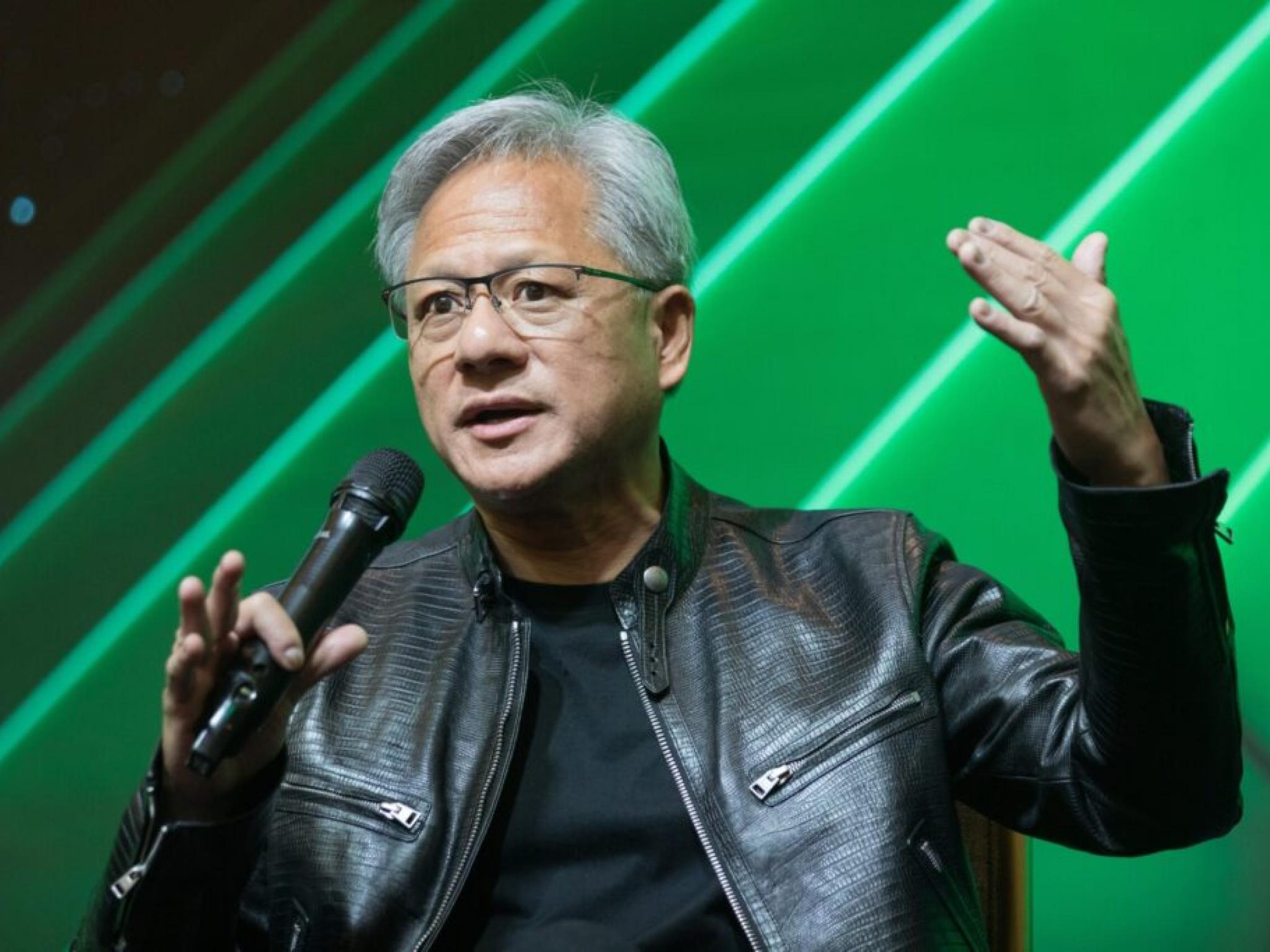
  • Nvidia’s $0 In China Could Be A Blessing In Disguise

    Nvidia’s $0 In China Could Be A Blessing In Disguise

    Nvidia Corp‘s (NASDAQ:NVDA) exit from China has been framed as a policy-driven blow, but AI-focused investors may view it as a chance for the company to double down on high-margin opportunities elsewhere.

    Last week, CEO Jensen Huang noted the company went from 95% market share in China to zero — a huge market loss on paper. Nvidia’s financial forecasts no longer assume any revenue from China, he added.

    • Track NVDA stock here.

    Yet the real story lies in where Nvidia is channeling its resources now: into AI data centers, enterprise GPUs, and cloud partnerships that are driving unprecedented demand.

    Read Also: Nvidia’s Silicon Silk Road: From China’s Firewalls To Saudi Arabia’s Data Palaces

    Shifting Focus From Volume To Profitability

    China represented scale, but not necessarily the high-margin growth that powers Nvidia’s AI leadership. Freed from the geopolitical and compliance challenges of the Chinese market, Nvidia can now focus on premium AI chips, enterprise deployments, and U.S.-friendly cloud partnerships.

    Investors should see this as a reallocation of capital from politically constrained volume to sectors where Nvidia can capture pricing power and strong margins, a subtle but meaningful shift in strategy.

    Supply Chains That Align With AI Growth

    The China exit also forces Nvidia to realign its supply chains and production priorities. By focusing on countries and partners aligned with Western technology policies, Nvidia reduces regulatory risk and ensures faster deployment of AI-focused GPUs to hyperscale cloud providers — the very engines of AI revenue growth.

    In other words, what looks like a market loss is actually an operational pivot toward the fastest-growing and most profitable segments of the AI market.

    The Investor Takeaway

    Nvidia’s zero exposure to China is headline-grabbing, but the real implication is about strategic prioritization. By trading geographic scale for profit-focused AI growth, Nvidia is betting on sectors with stronger pricing power, less political risk, and higher margins.

    For investors, the lesson is clear: sometimes policy costs aren’t a loss — they’re a forced lens that sharpens focus on where the money actually is in AI.

    Read Next:

    Image: Shutterstock